
How to Remove Marble Stains: A Complete Guide to Protecting Your Marble Surfaces
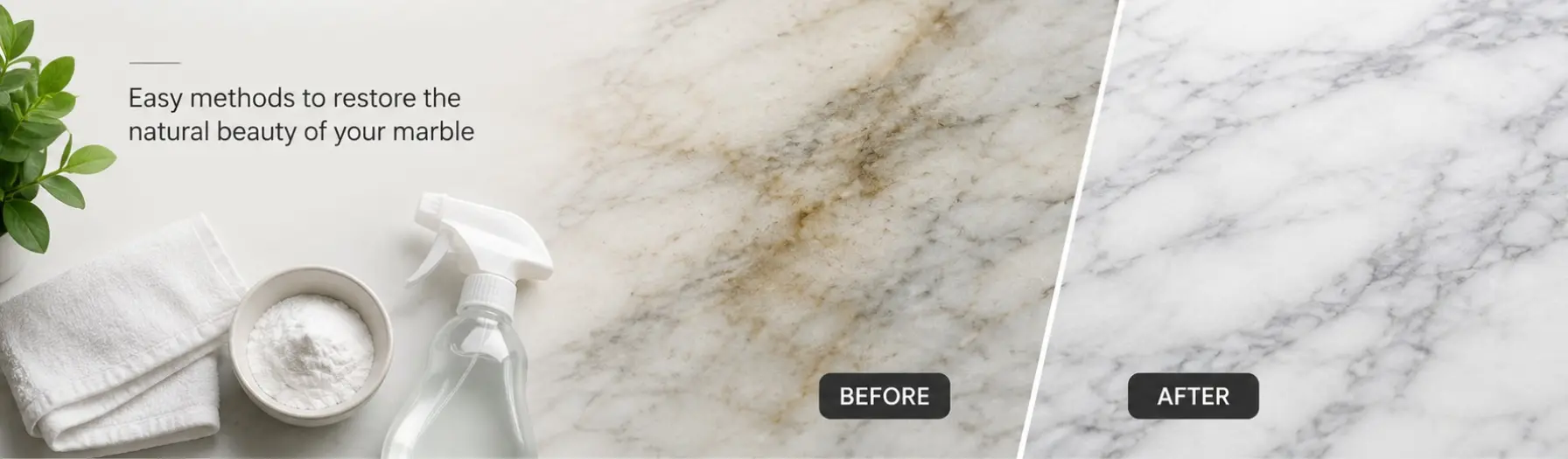
Marble is one of the most elegant and luxurious natural stones used in homes and commercial spaces. From stunning countertops and flooring to decorative accents and sculptures, marble has long been a symbol of sophistication and timeless beauty.
However, despite its durability, marble is a porous material that can easily absorb liquids, dirt, and contaminants. If spills and stains are not treated promptly, they can permanently damage the surface and diminish its natural beauty.
In this guide, you’ll learn how to identify, remove, and prevent common marble stains while keeping your marble surfaces looking flawless for years.
What Should You Do When Something Spills on Marble?
Marble is highly porous, which means liquids can quickly penetrate the surface and create stains.
The moment a spill occurs:
- Blot the spill immediately using a soft cloth.
- Avoid rubbing, as this can spread the stain.
- Clean the area with a marble-safe cleaner.
- Dry the surface thoroughly.
Quick action can often prevent a spill from becoming a permanent stain.
How to Remove Marble Stains
If a stain has already formed, don’t panic. Most marble stains can be removed successfully when treated correctly.
Before attempting stain removal, it is important to identify the type of stain. Different stains require different cleaning methods.
Common Types of Marble Stains
Below are the most common stains that affect marble countertops, floors, and other marble surfaces.
1. Oil-Based Stains
Oil stains are commonly caused by:
- Cooking oils
- Grease
- Butter
- Milk
- Hand lotions
- Cosmetic products
These stains typically appear as yellow, brown, or dark spots on the marble surface.
2. Organic Stains
Organic stains are among the most common marble stains and are caused by:
- Coffee
- Tea
- Fruit juices
- Food spills
- Leaves and flowers
These stains usually appear light brown, dark brown, or pinkish in color.
3. Rust Stains
Rust stains occur when metal objects remain on marble surfaces for extended periods.
Common causes include:
- Nails
- Screws
- Metal cans
- Steel containers
Rust stains generally appear orange, copper, or brown.
4. Water Stains
Water stains often develop when:
- Glasses are left on marble countertops.
- Hard water accumulates around sinks.
- Moisture remains on the surface for long periods.
These stains may appear as cloudy spots, rings, or mineral deposits.
5. Mold and Mildew Stains
Bathrooms, kitchens, and other damp environments can encourage mold and mildew growth on marble surfaces.
These stains often appear as dark spots or discoloration.
6. Ink Stains
Ink stains can be caused by:
- Pens
- Markers
- Highlighters
- Permanent markers
- Certain beverages such as wine
These stains can be either water-based or alcohol-based.
7. Etch Marks
Etching is not technically a stain but a form of surface damage.
Acidic substances such as:
- Lemon juice
- Orange juice
- Vinegar
- Wine
can react with marble and wear away its polished surface, leaving dull spots known as etch marks.
8. Paint Stains
Paint splashes during renovation or decorating projects can leave stubborn stains on marble.
The difficulty of removal depends on:
- The type of paint
- The size of the stain
- How long the paint has been on the surface
How to Remove Marble Stains
Many marble stains can be treated using a poultice.
What Is a Poultice?
A poultice is a thick cleaning paste designed to draw stains out of porous stone surfaces such as marble.
It works by absorbing the stain from deep within the stone and pulling it toward the surface.
Removing Oil-Based Stains
Oil stains can often be removed using a poultice containing mineral spirits.
Steps
- Apply the poultice to the stained area.
- Cover with plastic wrap.
- Leave it for several hours or overnight.
- Remove and rinse thoroughly.
Repeat if necessary.
Removing Organic Stains
Organic stains can usually be treated with a poultice made from:
- 6% hydrogen peroxide
Apply the mixture to the stain and allow it to work before rinsing.
Important Note
Hydrogen peroxide may lighten dark-colored marble, so always test in an inconspicuous area first.
Removing Rust Stains
Rust stains are among the most difficult marble stains to remove.
Possible treatments include:
- Acid-free rust removers specifically designed for natural stone
- Professional-grade poultices
If the stain persists, professional marble restoration may be necessary.
Removing Water Stains
Water stains are generally easier to remove.
You can use:
- A marble-safe cleaner
- Fine-grade (0000) steel wool for light polishing
Always use gentle pressure to avoid scratching the marble surface.
Removing Mold and Mildew Stains
Mold stains should be treated using cleaners specifically designed for natural stone surfaces.
Avoid bleach-based products, as they may damage the marble.
Removing Ink Stains
Ink stains can often be removed using a hydrogen peroxide poultice.
Apply the poultice to the affected area and allow it to draw the stain out before rinsing thoroughly.
What If the Stain Doesn’t Come Out?
If the stain remains after the first treatment, don’t worry.
Many marble stains require multiple applications before they are fully removed.
Recommended Steps
- Reapply the poultice.
- Allow additional time for absorption.
- Repeat the process if necessary.
If the stain still persists, contact a professional marble restoration specialist for expert assistance.
What Not to Use on Marble
When attempting to remove stains, it’s important not to cause additional damage.
Avoid Using
- Bleach
- Vinegar
- Lemon juice
- Acid-based cleaners
- Harsh chemical cleaners
- Abrasive scrubbing pads
These products can etch, discolor, or permanently damage the marble surface.
How to Prevent Marble Stains
Prevention is always easier than stain removal.
The most effective way to protect marble is through proper sealing.
Why Marble Sealing Is Important
A quality marble sealer helps:
- Reduce liquid absorption
- Prevent staining
- Protect against dirt buildup
- Extend the life of the stone
Although sealing greatly improves stain resistance, it does not make marble completely stain-proof.
How to Seal Marble Surfaces
Sealing marble is a straightforward process.
Step 1: Clean the Surface
Ensure the marble is completely clean and dry before applying the sealer.
Step 2: Apply the Sealer
Apply the sealer evenly using:
- A soft cloth
- A brush
- A spray bottle (depending on the product)
Ensure complete coverage of the entire surface.
Step 3: Allow Penetration
Leave the sealer on the surface for approximately 15 minutes.
If the marble absorbs the sealer quickly, apply an additional coat.
Step 4: Remove Excess Sealer
Wipe away any remaining sealer with a clean cloth.
Step 5: Allow Proper Curing
Allow the marble surface to cure for at least 24 hours before regular use.
Additional Tips for Marble Care
To keep marble surfaces looking beautiful:
- Clean spills immediately.
- Dust and clean regularly.
- Use coasters under drinks.
- Use mats and protective pads under furniture.
- Avoid acidic foods and cleaners on marble surfaces.
- Reseal marble every few months or as recommended by the manufacturer.
Regular maintenance can significantly reduce the risk of staining and costly repairs.
Final Thoughts
Marble is a stunning natural stone that adds luxury, elegance, and value to any property. While it is susceptible to staining due to its porous nature, most stains can be successfully removed when treated correctly.
By understanding the different types of marble stains, using proper cleaning methods, and sealing your marble regularly, you can preserve its beauty and keep your marble countertops, floors, and surfaces looking pristine for years to come.
For severe stains, etching, or restoration work, professional marble cleaning and polishing services can help restore your marble to its original brilliance.